

AME Milwaukee 2026 International Conference
PRESENTATIONS


Presentation

Finding focus: One manufacturer's path to double digit growth
Getting more from what you already have
OVERVIEW
Every operations leader faces the same challenge: too many priorities competing for limited resources. We start everything and finish nothing fast enough. This plant was no different.
ACT Test Panels had strong demand, capable people and solid processes — yet the company struggled with on-time delivery, overtime costs and margins. The team assumed they needed more capacity. They were wrong.
In early 2025, three members of ACT's operations team learned Theory of Constraints (TOC) principles at a Flow Solutions Workshop. The breakthrough wasn't a new tool or technology — it was a fundamental shift in how they thought about work. They discovered that their excess work-in-process wasn't just tying up cash; it was actually constraining their revenue.
The ACT team immediately began reducing WIP levels and shortening lead times. Within weeks, they removed over 150,000 units from our system. The results were dramatic: on-time delivery improved 10%, overtime dropped 25%, and revenue and net income increased by double digits — all with the same resources.
This session shares ACT's journey and the practical steps any operation can apply. You'll learn how to identify where your system is truly constrained, why "starting less" actually delivers more and how to align your team around what matters most. Whether you're in manufacturing, healthcare or services, the principles translate. They've led improvement initiatives across multiple sites and corporations — but they've never seen results this significant, this fast.
ACT Test Panels had strong demand, capable people and solid processes — yet the company struggled with on-time delivery, overtime costs and margins. The team assumed they needed more capacity. They were wrong.
In early 2025, three members of ACT's operations team learned Theory of Constraints (TOC) principles at a Flow Solutions Workshop. The breakthrough wasn't a new tool or technology — it was a fundamental shift in how they thought about work. They discovered that their excess work-in-process wasn't just tying up cash; it was actually constraining their revenue.
The ACT team immediately began reducing WIP levels and shortening lead times. Within weeks, they removed over 150,000 units from our system. The results were dramatic: on-time delivery improved 10%, overtime dropped 25%, and revenue and net income increased by double digits — all with the same resources.
This session shares ACT's journey and the practical steps any operation can apply. You'll learn how to identify where your system is truly constrained, why "starting less" actually delivers more and how to align your team around what matters most. Whether you're in manufacturing, healthcare or services, the principles translate. They've led improvement initiatives across multiple sites and corporations — but they've never seen results this significant, this fast.
Key Learning Objectives
1.How to identify your operation's true constraint — the single point that determines overall system performance.
2. Why excess work-in-process often constrains revenue: How reducing WIP can simultaneously improve delivery, quality and profitability.
3. A practical framework for prioritization: How to decide what to start, what to defer and how to align your entire team around those decisions.
4. The counterintuitive relationship between utilization and throughput: Why keeping everyone busy can actually slow everything down.
5. How to apply these principles in your environment
2. Why excess work-in-process often constrains revenue: How reducing WIP can simultaneously improve delivery, quality and profitability.
3. A practical framework for prioritization: How to decide what to start, what to defer and how to align your entire team around those decisions.
4. The counterintuitive relationship between utilization and throughput: Why keeping everyone busy can actually slow everything down.
5. How to apply these principles in your environment
PresenterS
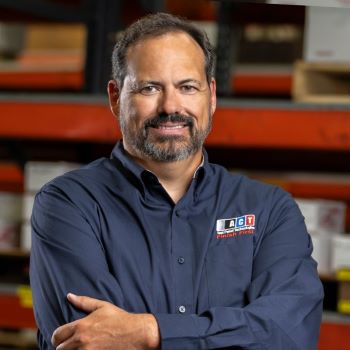
Scott Crosley
President
ACT Test Panels
Scott Crosley is a 30-year veteran of the coatings industry, with experience in surface treatments, coatings and manufacturing. Crosley spent more two decades at Sherwin‑Williams, advancing through a series of global leadership roles, including senior director of global sales force effectiveness and global usiness director.
President
ACT Test Panels
Scott Crosley is a 30-year veteran of the coatings industry, with experience in surface treatments, coatings and manufacturing. Crosley spent more two decades at Sherwin‑Williams, advancing through a series of global leadership roles, including senior director of global sales force effectiveness and global usiness director.
He currently serves as the president of ACT Test Panels, where he leads overall strategy, growth and commercial execution.
View on LinkedIn
View on LinkedIn

Vinny Monteiro
Director, Strategic Services
Goldratt Group
Vinny Monteiro is a strategic services director at Goldratt Group with 15 years of experience applying Theory of Constraints across healthcare, manufacturing, supply chain, logistics, service and tech industries.
Director, Strategic Services
Goldratt Group
Vinny Monteiro is a strategic services director at Goldratt Group with 15 years of experience applying Theory of Constraints across healthcare, manufacturing, supply chain, logistics, service and tech industries.
He holds Lean Six Sigma Black Belt (ASQ) and PMP certifications, and earned both his B.S. in industrial and systems engineering and M.S. in engineering management from the University of Texas at Arlington.
View on LinkedIn
View on LinkedIn
TAGS
Click on a tag to discover more sessions with that theme, topic or level.
Click on a tag to discover more sessions with that theme, topic or level.
Operations improvement
Level: Intermediate
