

AME Milwaukee 2026 International Conference
PRESENTATIONS


Presentation

Why traditional accountability doesn’t work
And the leadership principle that actually drives results
OVERVIEW
This session shares the unexpected story behind the rapid growth of the Boeing Commercial Airplanes (BCA) Engineering Leadership Development Program — and the single leadership principle that made its success possible.
Thirteen years into his career, the speaker found himself pitching for his job under intense uncertainty. What followed should not have worked: a loosely defined idea, no formal program, no polished curriculum — and yet, within months, the initiative scaled from a pilot to a global leadership program requested across engineering, manufacturing and quality organizations.
The reason it worked had little to do with content volume, incentives or enforcement. It worked because of the leadership environment in which the program was created. Being given full trust, autonomy and decision-making authority created an extreme sense of ownership — one that drove personal accountability, extraordinary effort and a refusal to let the initiative fail.
In this session, participants will explore why traditional accountability models based on oversight and consequences often produce defensiveness and disengagement rather than results. Through this real leadership case study, the session will reframe accountability as something leaders cannot impose — but can intentionally create.
Attendees will learn how ownership shows up as a felt experience, why leadership intent alone is insufficient and how trust, autonomy and decision-making authority combine to create environments where people will hold themselves to higher standards than any leader ever could.
Participants will leave with a practical framework for creating ownership-driven accountability in their own organizations — without new programs, added bureaucracy or increased control — resulting in stronger engagement and better results.
Thirteen years into his career, the speaker found himself pitching for his job under intense uncertainty. What followed should not have worked: a loosely defined idea, no formal program, no polished curriculum — and yet, within months, the initiative scaled from a pilot to a global leadership program requested across engineering, manufacturing and quality organizations.
The reason it worked had little to do with content volume, incentives or enforcement. It worked because of the leadership environment in which the program was created. Being given full trust, autonomy and decision-making authority created an extreme sense of ownership — one that drove personal accountability, extraordinary effort and a refusal to let the initiative fail.
In this session, participants will explore why traditional accountability models based on oversight and consequences often produce defensiveness and disengagement rather than results. Through this real leadership case study, the session will reframe accountability as something leaders cannot impose — but can intentionally create.
Attendees will learn how ownership shows up as a felt experience, why leadership intent alone is insufficient and how trust, autonomy and decision-making authority combine to create environments where people will hold themselves to higher standards than any leader ever could.
Participants will leave with a practical framework for creating ownership-driven accountability in their own organizations — without new programs, added bureaucracy or increased control — resulting in stronger engagement and better results.
Key Learning Objectives
1. Why holding people accountable often produces the opposite result
2. The difference between traditional accountability and true accountability
3. How ownership — not incentives or enforcement — drives optimal results
4. How to apply this principle to critical initiatives and teams
2. The difference between traditional accountability and true accountability
3. How ownership — not incentives or enforcement — drives optimal results
4. How to apply this principle to critical initiatives and teams
Presenter
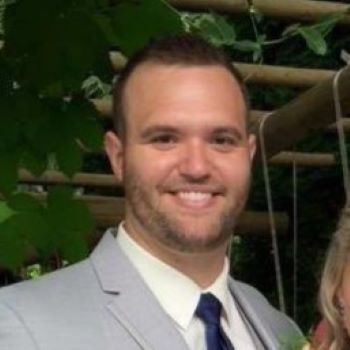
Travis Foster
Organizational Development / BCA Engineering Leadership Development Program Leader (FUEL)
BOEING
Travis Foster is the head of BCA engineering leadership development at Boeing. In 2025, Foster developed content for the BCA Leadership Development Program and personally delivered classes globally to 500 engineering and manufacturing managers responsible for roughly 10,000 employees.
Organizational Development / BCA Engineering Leadership Development Program Leader (FUEL)
BOEING
Travis Foster is the head of BCA engineering leadership development at Boeing. In 2025, Foster developed content for the BCA Leadership Development Program and personally delivered classes globally to 500 engineering and manufacturing managers responsible for roughly 10,000 employees.
He later expanded the program to reach 1,500 engineering managers and 500 manufacturing managers, training an additional six instructors to support the program’s growth.
Foster holds a master of engineering in industrial & systems engineering from the University of Washington and is a certified John Maxwell trainer, speaker, coach and DISC facilitator.
Earlier in his career, Foster served as a first-line leader in both manufacturing and industrial engineering, where he developed his philosophy for building high-performance cultures and teams. Today, Foster focuses on teaching and coaching leaders, equipping them with practical leadership philosophies and tactics to build high-performing teams and cultures that drive results.
View on LinkedIn
Foster holds a master of engineering in industrial & systems engineering from the University of Washington and is a certified John Maxwell trainer, speaker, coach and DISC facilitator.
Earlier in his career, Foster served as a first-line leader in both manufacturing and industrial engineering, where he developed his philosophy for building high-performance cultures and teams. Today, Foster focuses on teaching and coaching leaders, equipping them with practical leadership philosophies and tactics to build high-performing teams and cultures that drive results.
View on LinkedIn
TAGS
Click on a tag to discover more sessions with that theme, topic or level.
Click on a tag to discover more sessions with that theme, topic or level.
People-centric leadership
Level: Intermediate
